 Screening
Configured policy by property or market
Screening laws
Tenant screening laws vary. Your workflow should show that.
National screening rules, fair-housing expectations, and local fee or criminal-history restrictions can all affect how teams configure rental application workflows.
- 01Show the boundary
- 02Support consistent review
- 03Adapt by market
- 04Use reviewed criteria
Short answer
What tenant screening laws should landlords know?
Tenant screening laws can include FCRA obligations for consumer reports, fair-housing rules, applicant consent, adverse-action requirements, and state or local limits on fees or screening criteria. Burnt helps organize the workflow, but operators should configure policies with counsel.
Trust record
What should stay visible in the record.
Trust content should support the product workflow by making consent, partner boundaries, and review context easy to inspect.
Package and fee model context
Consumer-report partner boundary
Audit trail for review
Trust and compliance
Built around consent, criteria, and reviewable records.
Trust content should help buyers and applicants understand the workflow without taking attention away from the screening product itself.
Applicant consent
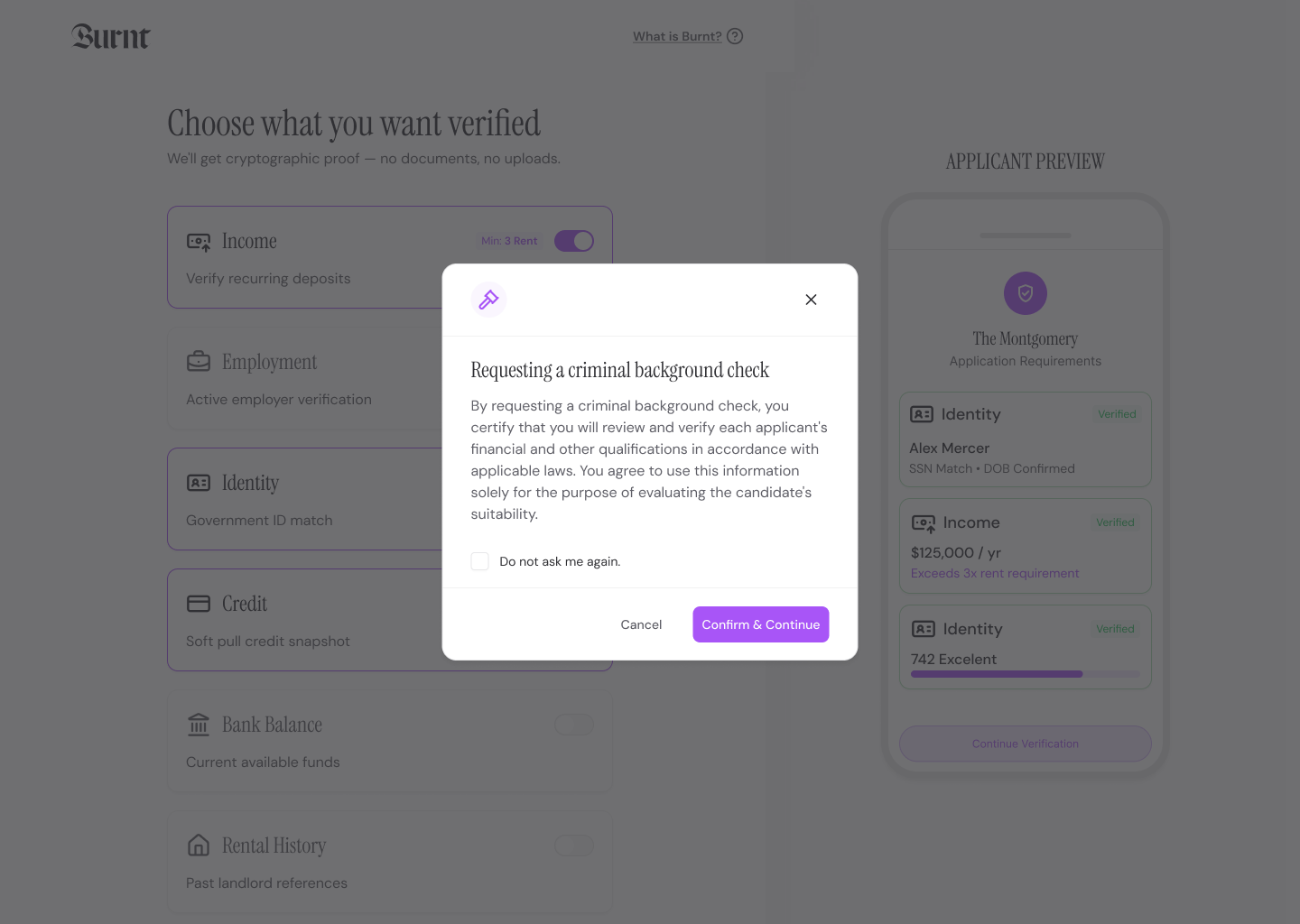
Screening begins with applicant authorization, clear package context, and a record of what the applicant completed.
FCRA partner modules
Credit, background, and eviction checks are presented as partner-powered modules with the right decision boundary made explicit.
Adverse-action context
Operators can keep report status, criteria, and applicant-support context together when consumer reports affect decisions.
Fair-housing consistency
Teams can organize packages and criteria by property or market so reviewers are not improvising applicant-by-applicant.
How it works
From application link to reviewable result.
Map markets
Identify where screening fees, criminal-history review, income criteria, or timing rules differ.
Configure consistently
Use packages and criteria that reflect the policy for each property.
Review periodically
Update workflows as laws, partner coverage, and portfolio requirements change.
Use cases
Designed for real rental workflows.
Whether you run one unit or a national portfolio, each workflow keeps the answer focused and the next step clear.
- Multi-state property managers
- NYC and California fee review
- Fair-housing policy reviews
- Portfolio onboarding
FAQ
Questions this page answers.
Tenant Screening by Burnt
Send the link. Guide the renter. Review one package.
Launch with screening links or talk through a portfolio workflow with the Burnt team.